Even the most brilliant products or services won’t sell themselves. Without attention-grabbing website ads, your audience might never discover what you offer. But crafting ads that convert—turning casual clicks into loyal customers—isn’t just about flashy visuals or clever slogans. It’s about strategy, precision, and leveraging the right tools. Whether new to website advertising or looking to refine your approach, this guide breaks down the process into actionable steps. By the end, you’ll know how to advertise your website effectively.
Ready to dive in? Let’s start by understanding why website advertising deserves a prime spot in your marketing playbook.
In a hurry? Listen to the podcast now.
Why Website Advertising Matters?
 Website ads aren’t just digital billboards—they’re your virtual sales team, working around the clock to attract and engage potential customers. In a world where 81% of shoppers research products online before buying, online business advertising bridges the gap between discovery and action.
But here’s the catch: generic ads rarely cut it. To stand out, your campaigns need to resonate with your audience’s needs, preferences, and pain points. That’s where strategy comes in.
The Role Of Website Ads In The Customer Journey
 Website advertising isn’t just about immediate conversions. It plays a crucial role at different stages of the buyer’s journey:
- Awareness Stage: Display ads introduce your brand to potential customers who may not have heard of you before.
- Consideration Stage: Retargeting ads remind users who visited your site but didn’t convert, keeping your brand top-of-mind.
- Decision Stage: Direct response ads with strong calls-to-action (CTAs) encourage users to take action, whether making a purchase, signing up, or requesting a demo.
Next, we’ll walk through the first critical step: defining exactly what you want to achieve and who you’re trying to reach.
Step 1: Define Your Goals And Target Audience
 Before writing a single word of ad copy, ask yourself: What’s the purpose of your website advertising campaign? Are you driving sales, boosting sign-ups, or raising brand awareness? Clear goals shape every decision, from budgeting to messaging.
Equally important is understanding your audience. Who are they? What challenges do they face? Tools like AI for ads can analyze data to uncover audience demographics, browsing habits, and even hidden preferences. With these insights, you’ll craft ads that speak directly to their needs.
Building Customer Personas
To effectively target your audience, create detailed customer personas that include:
- Demographics: Age, gender, location, income level.
- Psychographics: Interests, values, lifestyle choices.
- Pain Points: Problems they need solutions for.
- Buying Behavior: How they shop and make purchasing decisions.
Once your goals and audience are locked in, it’s time to pick the perfect stage for your website ads.
Step 2: Choose The Right Platform For Your Website Ads
 Not all platforms are created equal. Google Ads might excel for search-based intent, while Instagram’s visual feed could showcase products more effectively. Your choice depends on where your audience spends time and how they interact with content
Best Platforms For Website Advertising
- Google Ads: Ideal for users actively searching for solutions. Best for intent-driven traffic.
- Facebook/Instagram Ads: Perfect for visually-driven audiences and brand awareness.
- LinkedIn Ads: Best for B2B or professional services.
- TikTok & Snapchat Ads: Great for younger audiences and viral brand exposure.
AI-Powered Platform Selection
Unsure where to start? Tools like AdsGPT simplify platform selection by analyzing your audience and goals, ensuring your online business advertising efforts hit the mark.
With your platform chosen, let’s tackle the heart of your campaign: the ad itself.
Step 3: Craft Compelling Ad Copy
Great website ads blend clarity with persuasion. Start with a headline that sparks curiosity or addresses a pain point. For instance, instead of “Buy Our Software,” try “Tired of Manual Data Entry? Automate Tasks in 5 Minutes.”
Elements of High-Converting Ad Copy
- Attention-Grabbing Headline: Use powerful words and emotional triggers.
- Clear Value Proposition: What makes your offer unique?
- Strong CTA: Guide users to take the next step (“Start Your Free Trial,” “Get 50% Off Today”).
- Concise and Conversational Tone: Keep it simple and engaging.
Struggling with writer’s block? AI for ads tools like AdsGPT generates data-backed copy tailored to your audience, saving time while boosting relevance.
But words alone won’t win clicks—your visuals need to shine too.

Step 4: Design Eye-Catching Visuals
Humans process images 60,000 times faster than text, making visuals a non-negotiable part of website advertising. Use high-quality images or videos that align with your brand and message.
Best Practices for Ad Design
- Use a Single, Clear Focal Point
- Incorporate Bold, High-Contrast Colors
- Keep Text Minimal and Readable
- Leverage Video Ads for Higher Engagement
Tools like AdsGPT even offer AI-driven design suggestions, ensuring your website ads look polished without hiring a graphic designer.
Now that your ad looks and sounds great, let’s ensure it converts.
Step 5: Optimize For Conversions
Your ad might drive clicks, but if your landing page confuses visitors, those clicks won’t turn into sales. Ensure your landing page:
- Matches the ad’s messaging (no bait-and-switch!).
- Loads quickly on all devices.
- Features a clear, singular CTA.
AI for ads takes this further by testing different page layouts, CTAs, or headlines to identify what resonates most with your audience.
Step 6: Set A Budget And Bid Strategically
 Website advertising costs can spiral without careful planning. Start small, allocate funds to high-performing platforms, and use automated bidding tools to maximize ROI.
Budgeting Tips
- Start with a Test Budget: Analyze performance before scaling up.
- Use AI-Powered Bidding: AdsGPT adjusts bids in real-time to maximize conversions.
- Monitor Cost-Per-Click (CPC) and Return on Ad Spend (ROAS)
Step 7: Monitor And Analyze Performance
Track metrics like click-through rates (CTR), conversion rates, and return on ad spend (ROAS). Tools like Google Analytics or AdsGPT’s dashboard offer real-time insights, letting you tweak underperforming ads or double down on winners.
For example, if your CTR is low, experiment with new headlines or visuals. If conversions lag, refine your landing page.
How AdsGPT Elevates Your Website Advertising Strategy
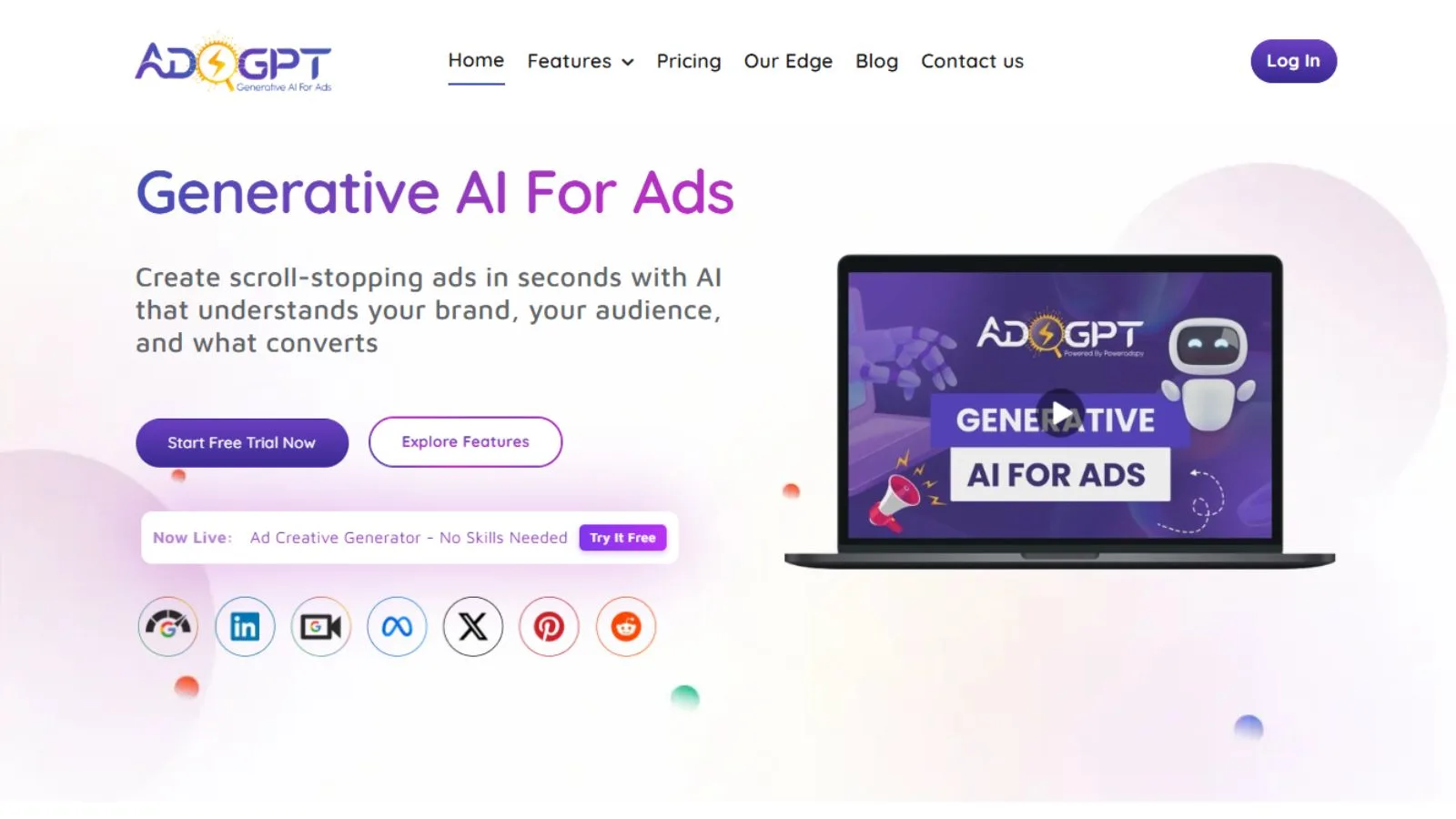 AdsGPT is an AI-powered solution designed to simplify and optimize your website advertising efforts. By leveraging advanced algorithms, it streamlines ad creation, enhances targeting, and improves performance tracking, allowing you to focus on growth while AI handles the heavy lifting.
Features of AdsGPT
- Smart Ad Copywriting: AdsGPT generates compelling, SEO-friendly ad copy in seconds, ensuring your message resonates with your audience.
- Audience Insights: The platform automatically analyzes data to identify high-value demographics, allowing for precise targeting.
- Cross-Platform Management: Run and monitor ad campaigns across multiple channels, including Google, Facebook, and Instagram, all from a single dashboard.
- Performance Alerts: Get real-time notifications and actionable insights to fine-tune your campaigns and maximize ROI.
- AI-Driven Design Suggestions: Optimize visuals effortlessly with AI-powered recommendations for ad creatives.
With AdsGPT, website advertising becomes more efficient, strategic, and results-driven, helping businesses achieve better engagement and conversions with minimal effort.
Read More
7 Reasons Why You Need AI Ads Generator For Advertising Your Business
Conclusion
Website advertising isn’t a guessing game. By defining goals, understanding your audience, and combining creativity with tools like AdsGPT, you’ll create website ads that don’t just attract eyeballs—they drive real results.
Ready to transform your online business advertising strategy? Start with a clear plan, refine it relentlessly, and let AI do the heavy lifting. Your next high-converting campaign is just a few steps away.
FAQs
- How often should I update my online ads?
Refresh your ads every few weeks or whenever performance starts to dip. Small tweaks to headlines, visuals, or targeting can keep engagement strong. - What’s the best way to test different versions of an ad?
Use A/B testing. Change one element at a time—like the CTA or image—and compare results to see what your audience responds to most. - Why do some ads get clicks but no conversions?
Often the landing page doesn’t match the ad’s promise, feels confusing, or loads too slowly. Fixing these issues usually boosts results quickly. - Is it better to focus on one platform or run ads across multiple channels?
If you’re starting out, stick to the platform where your audience is most active. Once you see results, you can expand gradually to other channels. - How can small businesses compete with brands that have bigger ad budgets?
Focus on tighter targeting, clearer messaging, and strong value propositions. Smaller businesses often win by being more specific and personal in their approach.
MOST POPULAR